Warrior Role
Learn about the Warrior Personality and Soul
Home | Soul Types |


 Productive, organized, and grounded, Warriors are the "movers and shakers" in a society that get things done. Superb strategists and goal setters, Warriors know what they want, and how to get it. The world is seemingly theirs to explore, and all uncharted territories theirs to conquer.
Although as a rule, they are not excellent communicators, Warriors have an inherent sense of "street smarts" in their wiring that makes them a perfect fit for achieving success on the physical plane. In fact, it might have been the Warrior that said: life is a game, you play to win."
The most physical of all the roles, Warriors thoroughly enjoy the pleasures of earthly existence, having strong appetites for sex, food, sports, and meeting the challenges associated with success. Warriors are intensely in touch with their physicality and tend to display strong, muscular bodies, or at the very least, solid ones. When they play, they play hard, and in physical interactions with other roles, they must be mindful of their strength and be careful not to accidentally injure those around them. The instinctive drive of the Warrior will soften as they progress in Soul Age, but their inherent love of being physical will remain constant.Emotional and hot tempered at times, Warriors can be brutally blunt and even abrasive. Their intimidating physical presence can lead them to take advantage of the weak, and use excessive force to get their own way. A common misconception for some Warriors is that might makes right. They must avoid the inclination to push people around, or like a guard dog, be unduly suspicious of those that enter their territory.
Warriors love a good challenge, but can sometimes waste valuable energy fighting too many windmills, and lose the ability to discriminate between what's important. A copy of the bestseller, "Don't Sweat the Small Stuff," might be a good present for the Warrior, but it's doubtful they would read it -- they are usually too busy.
"What's the bottom line?" might very well be the mantra of the Warrior. They are quick to cut through the fat of any situation and assess its merits. Whether it be at Gettysburg or the conference room of a huge corporation, Warriors are the fearless foot soldiers who will go to the front line in any battle; yet, they can surprisingly have a soft side that's both maternal and nurturing. They are also very protective of their loved ones and can be incredibly loyal as a friend or spouse. As Warriors progress in maturation and comfortably slip into that proverbial rocking chair, peacefully viewing the world as Old Souls, their edge and instinctive drives begin to disappear, and an earthy kind of wisdom and sweetness sets in.
Recognizing a Warrior
Key point: PERSUASION.
Warrior eyes are cold and bluntly focused. They seem to eschew all hints of delicacy, favoring a strong, stony-eyed gaze that seems impenetrable and weighty, like two steel girders jutting out of the sockets. In fact, the light coming from warrior eyes can appear steely and metallic, almost reaching the intensity of the priest, but backed with a facial expression that sports a short-fuse or inner fierceness.
Out of all the roles, warriors and priests are known for having the brightest and most intense looking eyes.
Depending on the mood, warrior eyes can easily pivot in expression from the glacial sneer to a more earthy look, with a steamy and lustful appearance in the eyes. Warriors are also naturally rowdy, and they could be the poster child for the shit-eating grin.
The warrior's head gets described as a battering-ram at times, good for punching through the offensive line of a football scrimmage or withstanding the battery of a drunken brawl. Not all warriors are rough-riders, though, and old soul warriors, in particular, may seem mild and gentle -- although they will never look breakable. Warriors at any age are tough and able-bodied, a role built to last.
For more about warrior eyes, see the role photos page.
Important Points
 Warriors are goal oriented and seek a challenge. They often have low voices and appear grounded and solid.
Warriors typically have strong, muscular bodies that are ready to go to battle, either physically or idealistically.
Warriors are so energetic that they may find it uncomfortable to take a break from activity.
Warriors are highly persuasive and love a good argument with a worthy opponent.
Warriors enjoy working with others as a team and make excellent managers and supervisors.
Warriors are blunt and direct in their communication style. They may lack in the finer delicacies.
Warriors are highly protective of friends, family, and loyal followers.
 David Gregg
Famous Warriors
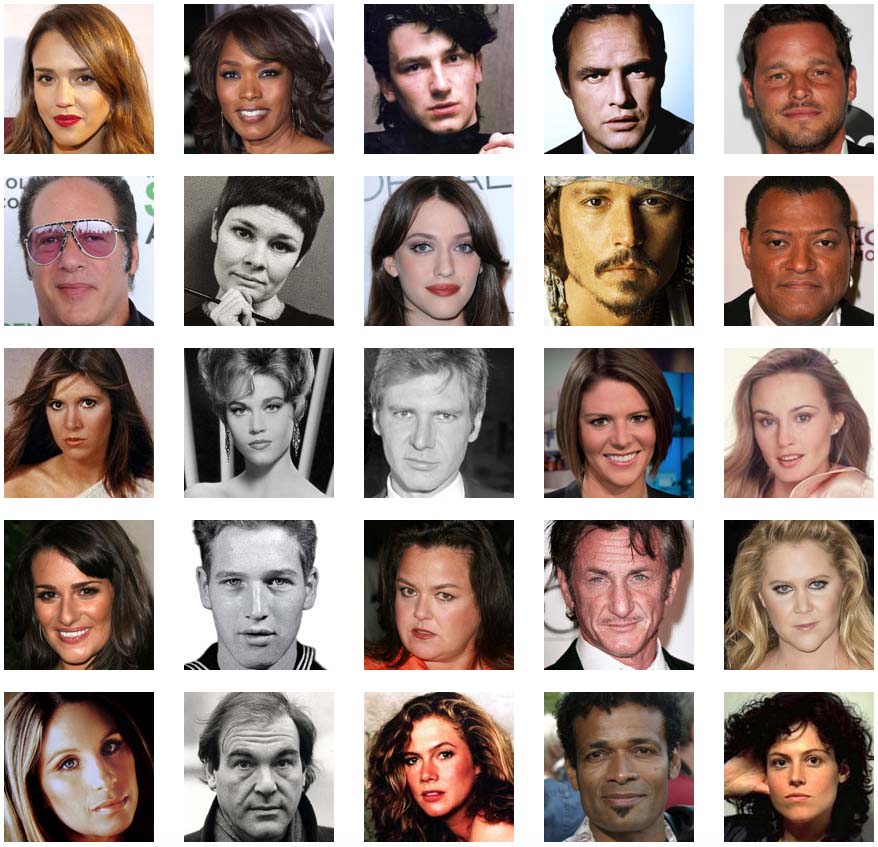

Other Famous Warriors:To be added.
The Seven Types of Warriors
Dependant on the secondary role influences of the essence twin and casting, one of the most exciting (and validating) aspects of the teachings shows how a role can be categorized into seven distinct types (or energetic flavors). A warrior with a discarnate priest ET, for example, will show that visual influence in their eyes and facial expression. When the ET is incarnate, however, the casting becomes more visually prominent. To see a full gallery of Warriors grouped by their secondaries, visit the Warrior Role Photos page.

See Our Full Gallery of Warriors & Their Secondary Roles
in Our ROLE PHOTOS Study
More On Warriors

People of the Warrior Role enjoy physical activity. The specific kind of activity of course depends on the Overleaves and various other personality factors, but in a broad sense their action is usually directed toward influencing other people or events to conform to their own actions or to some specific pattern of behavior. Taking the name of the Role literally, we can see how this works in the case of an actual warrior or soldier. Soldiers are taught to march in step, in formation. This kind of control of action seems perfectly natural to them.
Many other things can be said about a soldier that apply in some sense to the Warrior Role. Soldiers are not supposed to be afraid of death. They are exposed to it in war, and are expected to be willing to die for their cause. Indeed, of all the Roles, Warriors are the most likely to fulfill these expectations. This is because the Termination Process in its physical manifestation ultimately leads to literal death. This is that which in Warriors is often exhibited as a "death wish". In the worst instances, Warriors identify with destruction, participate in it joyfully, and are not averse to the destruction of war. Certain types of movies are obviously aimed at Warriors. Typical subject matter for this audience is war, martial arts, cops and robbers, or brutality, violence, and destruction of any kind.
A Role of Action
Soldiers are also supposed to be "tough". Often a Warrior prides himself on the hardships he can endure. He may even enjoy challenging himself to see how much punishment he can take. The Warrior is the most likely of the Roles to respond to the call to help someone in a situation which is full of danger and has the potential of death. Answering this challenge is his highest expression. Only a Warrior would willingly put himself through the rigors of war fought in jungle and desert. He finds fulfillment in overcoming severity and rigor. This sort of self-discipline is personally satisfying to him. Warriors are surprised that others cannot take the harsh treatment they thrive on. Consequently, they may not always be sympathetic to "wimps" and "weaklings" who cannot endure pain as they can. Not only can they "take it", but they can also "dish it out". In fact, Warriors are the most likely of the Roles to be guilty of inflicting pain (whether physical, emotional or mental depends on their Overleaves and other personality factors) on others for this very reason. In the worst occurrences, Warriors in the Negative Pole of Coercion can be mean, cruel, and brutal in their treatment of people and things.
 If a Warrior does not find his calling as an actual soldier in the military, he often does his conquering and subduing in the business world. This is a career of action. The Warrior businessman sees the world as unconquered territory over which to expand his financial influence. He is an entrepreneur. A very suitable business for this is as a shop keeper of some sort. A Warrior in the retail sales business enjoys inducing others to purchase his goods or services. Money is a medium of exchange, a transaction of Action, so the manipulation thereof gives a Warrior satisfaction. He enjoys controlling the actions of his company business. He makes rules and sets down guidelines for others to follow, so that everyone marches in step. He may tend to run his business like it were the military. Even though the Warrior Role is Negative, and such a person has the capacity to be passive, usually his talent for regulating the action results in his being promoted to a leadership position, even if he does not seek it. Other Role individuals recognize this inherent ability, and defer to it - except Kings that is.
Another suitable occupation for a Warrior is policeman. Here he can exercise his propensity for law and order, and for regulating the behavior of others and controlling events, in a very acceptable and suitable way. This is one of the highest and best careers for a Warrior to be in. Many a Warrior also finds his niche in society as a laborer. There is always a need in the world for someone to do the actual physical work of getting things done, and this is where the Warrior shines. Here he satisfies his need for activity which is goal-directed, and for energy expended in physical behavior which accomplishes some task. Also, truck driver is an appropriate career for a Warrior, because this involves exploration. Warriors are, metaphorically speaking, the legs of the body of mankind. They like to carry the body around with them - go here, go there, do this, do that - exploring the world. A salesman Warrior has elements of both exploration and conquest in his occupation to fulfill his nature. In whatever occupation a Warrior finds himself, he will generally apply a measure of discipline and adventurousness to it.
The Natural Overleaves of the Warrior
Like a person with the Goal of Submission, the Warrior wants to bring the world into obedience and discipline. Also, a Warrior is supposed to be loyal to his leader and to obey without question. A good Warrior must first subdue himself, to bring his own unruly traits into subordination, before he is truly fit to subdue others and the world. The principles of dedication, honor, respect, and duty are the ultimate expression of a Warrior's nature. Like a person in the Perseverance Mode, a Warrior is trained to be unwavering in his pursuit of the goal of conquest. He cannot allow himself to falter or fail before the end is reached. He must be able to weather the storms of adversity without yielding to them. It is not wise to try to push Warriors around, because they are usually resistant to bullying, but they are willing to be lead by someone who has earned their respect by proving themselves worthy of it by their actions. Like a person with the Martyrdom Feature, a Warrior must be willing to give up his life and lay down his personal freedom for the sake of others. Thus, in the highest expression of the Warrior Role, the conquests sought are not at the expense of others and of the environment, but for their benefit. In their worst expression, Warriors are sometimes reckless to their own detriment, even to the point of being suicidal. They may express a "death wish". The Cynic is inherently adverse to events in the world. He challenges everybody and everything with Contradiction or Denigration. Like the Cynic, the true Warrior is not a stranger to hardship and adversity. He must be willing to scorn the soft life of ease and comfort. Life is a harsh reality, and the world is a tough neighborhood. You have to fight to gain and hold your territory, whether physical, emotional, or mental. Warriors are the most naturally sexual Role, being in the same Process with the Sexual (Physical) Center. That is, sexuality typically comes easier to them than to the other Roles. Warriors identify with the goal of sex, which is to achieve a climax, a relaxation of tension, a subduing. For Warriors, sexuality is often handled as a game of conquest, like so many other things in their lives.
Gamesmanship
And speaking of games, Warriors typically enjoy games, sports, and athletics, because of the action and challenge involved therein. They are the most likely of the Roles to be involved in, or spectators of, professional sports. The rugged discipline and training involved is meaningful to them. The mock conflict and battle is also fulfilling to their natures. Warriors are inherently competitive. They like to "throw their weight around". They prove their mettle and harden their character by pretend games of competition, as well as in the real adversities of life. Warriors view sports not as games of skill so much as disciplines of rigor. The object is to find the groove, to narrow the action to one of total consistency.
Warriors are very goal-oriented. They have a knack for focusing and concentrating their energy toward getting to their goals, and excluding things that do not promote this. One of their virtues is that they can carry on when every one else (of the other Roles) has given up because the going got too tough for them. Their glory is that they will succeed where others might fail to get the job done, the task completed.
As parents, Warriors are likely to run their families somewhat like a military academy. They use rewards (in the Positive Pole of Persuasion) and punishments (in the Negative Pole of Coercion) to induce the behavior they desire in their children, their mate, or in their household.
Physical Appearance
If Warriors have a typical physical appearance, it would be that they are usually lean and sinewy. They have a rather rugged and athletic look to them. This is often an appearance they have developed by participation in sports or athletics, favorite pastimes of Warriors, and it is also often inherent in their bodies by heredity. This appearance is often used to advantage in their business dealings, if that is their occupation. It also obviously comes in handy if they end up in work involving physical labor.
Much of the above description of a Warrior is given with the masculine pronoun "he", and indeed much of it seems rather "masculine". The Warrior Role is the most "macho" of the Roles. However, "he" was used only for convenience above, and will be throughout the description of the Roles, and really has nothing to do with the masculinity or femininity of the Roles. However, it so happens that tomboys are more likely to be Warrior females than any other Role, but Warriors can also be quite "feminine", depending on the Overleaves and other personality factors. My own daughter is a Warrior, and a sweet one at that. As you would expect of a Warrior, she loves to play competitive games and sports, and she likes her gymnastics lessons. However, when she doesn't get her way, and she is in a bad mood, she is quite capable of resorting to the Warrior ways of violence - hitting, kicking, and cursing. When she is in a good mood, she uses her charming ways to persuade, beguile, influence, and convince others, so that she prevails in a beneficial and pleasing way.
 Phil Wittmeyer
Compatibility With Other Roles

WARRIOR-SERVER: Servers and warriors usually get along very well. Both tend to have much endurance, and it is easy for servers to view warriors’ toil as benefiting the common good, even in the military, if that jibes with the servers’ political beliefs. Warriors tend to like servers because they see servers as being down-to-earth and practical. Servers and warriors do not tend to fight as much as warriors can with most of the other roles. Servers and warriors are especially effective together as a team working together—for example, a server doctor and a warrior nurse would probably be very effective together in a high-stress situation. The higher the cardinality of the relationship—in other words, the higher the number of the combination’s sum—the more stress there tends to be in the relationship. Sometimes that can be exciting and can make for a lot of energy, but it can sometimes be too much. In a high-stress situation such as a hospital emergency room or a battle front, the server-warrior combination, which adds up to only four, can be a calm center of productive work. The server-artisan combination would even be more calm, but not necessarily more productive.
WARRIOR-ARTISAN: Artisans do not have to deal with that when teamed up with warriors, because warriors do not seek the public eye that much either, and warriors have more of a tendency to protect others. They would be protective toward artisans’ sense of vulnerability. Warriors may also offer artisans some useful discipline, challenging them to complete a project they have been stalling on, for instance. Warriors tend to be very appreciative of whatever artisans create. Warriors see what could be useful, how the world could work more efficiently, but unless it is a matter of simply jury-rigging something, they are generally not as good at actually coming up with the innovations that might achieve that. They can be in awe of the way that artisans can, often effortlessly, come up with new things. On the negative side, warriors can lack understanding or even be intolerant of artisans’ process. For warriors, life is a pretty simple business—you do what needs to be done. For artisans, life is a pretty complex business, and there are many variables to be played with. Warriors sometimes see artisans as having an “odd logic” that may actually be quite sound, but warriors do not see how it was arrived at, and therefore may tend to dismiss it. So the artisan-warrior alliance, which is quite common, is fraught with mystery for both parties, yet there is an unmistakable attraction. Warriors like to have someone to protect and to receive their help, and artisans like to feel that strength, that simplicity. Would you say that, more than the other roles, warriors equals male, and artisans equals female? In a sense, yes. These two roles certainly correspond with the male and female archetypes in this culture. Servers also correspond with the feminine, but a different aspect of the feminine—more the family-oriented, reliable, down-to-earth feminine. Of course, king is another side of the masculine archetype. Kings bring the sense of “the buck stops here, everything’s all right, I’m in control, leave it to me.” In your culture, that has been viewed as perhaps the highest manifestation of manhood—that is a much admired and valued trait in men. It is not surprising that people are becoming confused now that so many women are warriors and kings, and so many men are artisans and servers—and this will probably increase. The dynamics still hold true: warrior wives protect and shelter artisan husbands, even if the husbands are the main breadwinners and the wives are staying home—the wives still shelter and protect their husbands from the hurts of the world. The husbands still balance their wives, giving them a sense of creativity and unpredictability that is both fascinating and exasperating to warriors, since warriors tend to be fairly predictable people.
WARRIOR-WARRIOR: Warriors almost always get along fine with other warriors, and incidentally, since warrior is the number three position role, two warriors add up to six, one off from seven. Warriors find in other warriors a common basis for living, and if there are complementary life tasks and they have planned to be together in that lifetime, either as mates or in another close kind of relationship, they can, over time, fall in line with each other. They may not overtly demonstrate or acknowledge that they are compromising with each other, but in time they will gradually wear away each other’s rough edges, and fall into line with each other. They tend to have very good sex together if they are otherwise compatible. Warriors generally do not run into a problem with other warriors of wanting more sex than their partners, which can come up with some of the other roles and is very frustrating to warriors. Warriors can easily find common values for raising children and common political beliefs; when there is this alignment between them, they can have a very orderly household. Problems can arise if they have artisan or priest children (or rebellious sage children) who challenge them. On the surface it looks like warriors want to maintain the order at all costs—they want their children to go along with the program—but unconsciously, they often do not mind being challenged. In their negative pole, they may be cruel, even, in repressing rebellious actions, but in their positive pole, warriors have a strong sense of fairness. If rebelliousness is proven to be for a good reason, warriors will generally bend a certain amount with these children. For example, if the warriors are die-hard business people, Republican, right-wing churchgoer types, and they have an artisan child who wants to be an artist or actor, there may be some problems for that artisan in having such parents. But the parents will actually like being challenged, and if the child can prove his talent and his will to follow through on a different path than what his parents might have envisioned, they will generally go along.
WARRIOR-SCHOLAR: Warriors and scholars can be very good for each other. Warriors can bring out more of the “down and dirty” and the humor in scholars, so warriors tend to make better playmates for scholars than kings do. Warriors genuinely find scholars to be interesting. If warriors are in a hurry, they, too, can be impatient with scholars’ penchant for detail, but if warriors have some time on their hands, they may be willing to entertain a lot of detail from scholars, asking questions, challenging, occasionally practicing some one-upmanship—and making a pretty good time out of it. Since scholars are the number four position role and warriors are the number three—together they add up to seven—they sense that they can complement or add something to one another. One way in which they complement is that scholars, being the neutral role, can absorb warriors’ focused, earthy energy.
WARRIOR-SAGE: Sage-warrior is a good combination because there is the ability to laugh together, but whereas sages can procrastinate and play, warriors tend to exert pressure to get down to business as well. Warriors can play, but after the time for that has passed, warriors are ready to move on. So this is balancing. Also, warriors are not generally very good at articulating, although there are exceptions to this—centering plays a part—and, of course, sages are expert at this, so sages can help warriors with their communication. Warriors sometimes feel that sages understand them well because warriors do not have to say everything—sages can intuit some of it, and warriors very much appreciate that. All the same, sages can put pressure on warriors to at least try to verbalize their feelings, because sages want to hear the words—the words are their validation—even if they already know, even if they are getting the communication nonverbally, which they often do.
WARRIOR-PRIEST: Priests tend to be attracted to warriors, because warriors are, in some ways, opposite from them. Unbalanced priests can be cut off from the full and free ability to enjoy their body and the physical life itself, whereas warriors excel in enjoying the body and the physical life. Warriors are generally less attracted to priests than priests are to warriors because warriors may not be all that interested in being inspired, particularly in the younger soul cycles—they may not want to look up to the heavens if they are having a perfectly good time on the earth. They may also suspect that priests have the ulterior motive of trying to convert them. They may see priests as being rather like spies from the enemy camp. If warriors are converted—say, to a religion—then they may align with priests in converting others. More commonly, warriors would rather be free of what they would consider to be the limitations that priests seem to want to impose—especially if they are sexual. Warrior women may go along with their priest husbands’ sexual limitations—against extramarital affairs, for example—as long as there is a good sex life in the marriage. Warriors have respect for boundaries, as long as those boundaries are not suffocating to their essence, and, more than the other roles, they need some kind of sexual outlet. Warriors can be attracted to priests for priests’ healing ability. Warriors can get pretty beat up in life, and when they are finally ready to receive help, no role is better than priests for ministering to them, both physically and spiritually. But if warriors are perfectly happy in their physical involvements, priests may not be all that attractive, except perhaps as an object of lust, as the “mysterious opposite.”
WARRIOR-KING: Warrior-king is also generally an excellent combination. There tends to be mutual understanding and respect. Warriors see the leadership ability of kings, their ability to encompass the large picture of things—something warriors cannot necessarily do very well—so there is admiration, even awe, of this. But kings can greatly appreciate warriors’ ability to dig in and do what needs to be done, in a way that kings may not do; kings may be waiting to delegate to someone else. (They may do the thing if no one shows up, sometimes reluctantly, and then may feel irritated about it.) So this is a quite complementary combination, usually generating a lot of loyalty. There are no real major problems in this combination. There can be some huge fights, just as there can be between two warriors, but as long as the fights stay under control so that there is no demonstrated disloyalty or taking advantage of a known vulnerability in the other, these relationships are quite resilient in the face of a lot of fighting. (Deliberately bringing up a person’s most vulnerable place in order to get the better of him is considered unfair play.) Incidentally, artisans generally try to avoid fighting, and cannot handle it well in matings with warriors and kings. They can be confusing fighting partners for warriors and kings because they do not fight like warriors and kings do. They can be quite creative, subversive, and manipulative about it, often coming from left field. But artisans typically avoid conflict in the first place, and this can also be a problem in their relationships with warriors and kings, especially, who often like to bring their conflicts fully out into the open. Sages and priests can better hold their own with warriors and kings than artisans or servers can when there is a disagreement. Servers typically react in fights with warriors and kings by trying to smooth things over. Like artisans, it is not in their nature to fight, but if they think that someone’s basic needs are threatened, they will go to bat, and they can be quite persistent—persistence is their main fighting technique. For example, if they see that a child is being abused, they can be like a little mouse at the toes of an elephant, staying with the problem until something is done. However, wherever they can, they placate.
 Shepherd Hoodwin
Further Reading in Our "Soul Types Series"
Soul Types: Server, Artisan, Warrior, Scholar, Sage, Priest, King,
Soul Types Test, Relationships and Soul Types, Roles as Energy, How Soul Types Appear Physically and Energetically, Inputs, Soul Types (or Role) Photos: Server Photos, Artisan Photos, Warrior Photos, Scholar Photos, Sage Photos, Priest Photos, King Photos

Curious About Your Soul Type or Soul Age? Get it Professionally Channeled
Learn your soul age, unique soul type, and personality traits. All at half the cost of other channels.